In an effort to make this blog more reader friendly, I’ve separated “This Will Bring Health” into two sections. The below publication begins where pt. 1 concluded.
Learn how to course correct

As I’m trusting The Lord will gently guide you in your specific reproof, here are some strategic steps you can take that will lead towards change. Let’s focus on “course correcting” as the word “correction” from our root scripture 2 Tim 3:16. In this scripture, the word “correction” identifies restoration to an upright or right state.
A pharisee asked Jesus what the greatest commandment is. Jesus responded:
'And he said to him, “You shall love the Lord your God with all your heart and with all your soul and with all your mind. This is the great and first commandment. And a second is like it: You shall love your neighbor as yourself. On these two commandments depend all the Law and the Prophets.” ' Matthew 22:37-40 ESV.
This scripture is extremely powerful, descriptive and full of instruction! I’ll spare you from my rabbit hole into the original meanings and word interpretations of the above, but I will bring in what this scripture echoes. The Shema.
“Shema Yisrael, Adonai Eloheinu, Adonai Echad. שְׁמַע יִשְׂרָאֵל יְהוָה אֱלֹהֵינוּ יְהוָה אֶחָד”
Hear, O Israel: The Lord our God, the Lord is one. You shall love the Lord your God with all your heart (lēḇāḇ לֵבָב) and with all your soul (nefesh נֶפֶשׁ) and with all your might (mᵊ'ōḏ מְאֹד). And these words that I command you today shall be on your heart. You shall teach them diligently to your children, and shall talk of them when you sit in your house, and when you walk by the way, and when you lie down, and when you rise. You shall bind them as a sign on your hand, and they shall be as frontlets between your eyes. You shall write them on the doorposts of your house and on your gates. Deuteronomy 6:4-9

The course correct is this, Love the lord, teach the Lord, talk about the Lord, identify yourself as a child and follower of God by your words, actions, how you dress and how you present yourself. In other words, be different from the world, be set apart from culture, be Holy for the lord your God is Holy! Leviticus 11:44, 11:45, 19:2, 20:26, I Peter 1:16.
Loving God wholly and truly doesn’t stop at our relationship with him, Jesus calls us to also elevate our relationship with his children, our brothers and sisters in Christ. Matthew 22:40 calls us to love our neighbors directly as we love ourselves. Examine yourself and ask the Holy Spirit where you can love better, fuller, deeper.
Apply this training
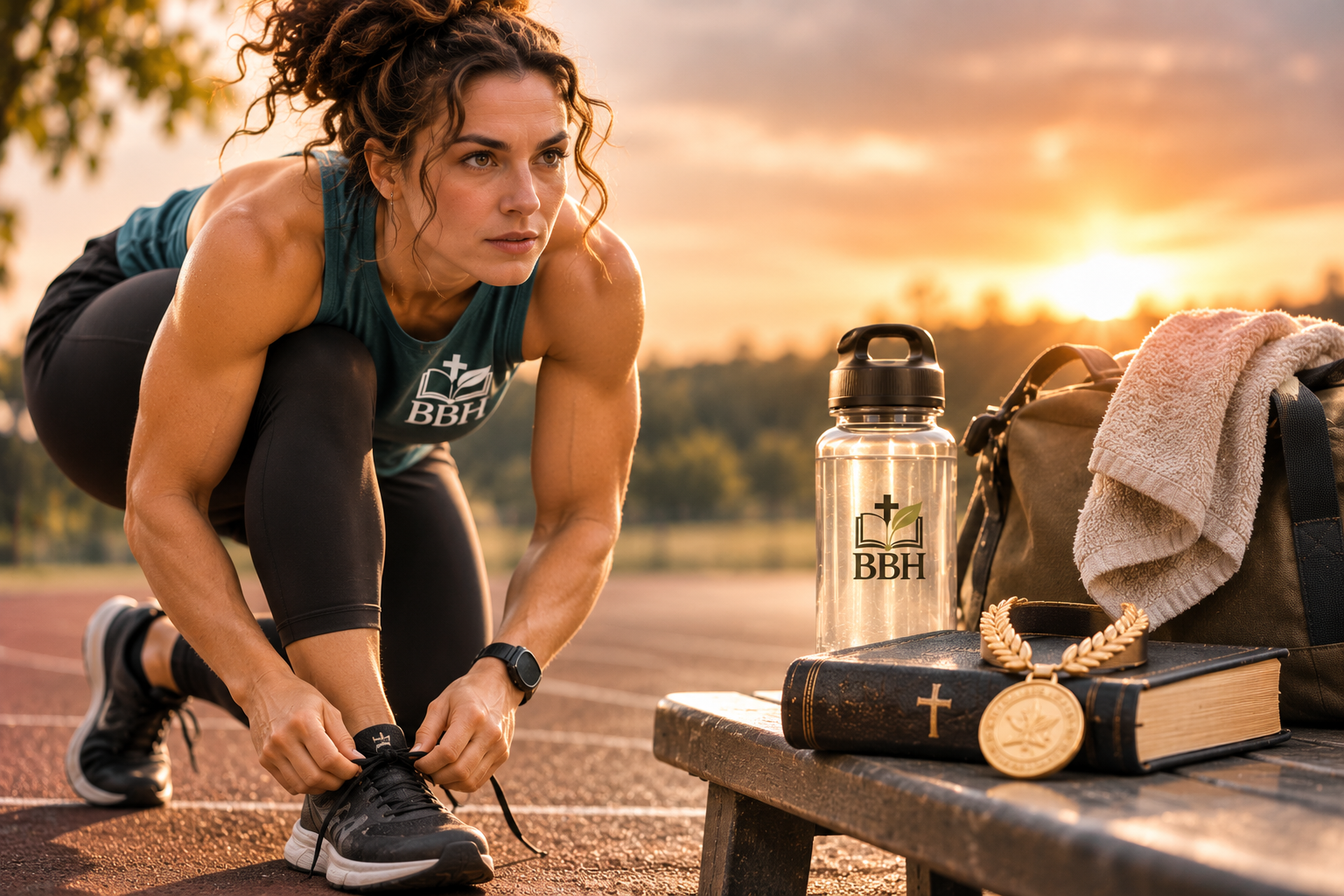
Do you not know that in a race all the runners run, but only one receives the prize? So run that you may obtain it. Every athlete exercises self-control in all things. They do it to receive a perishable “prize”, but we an imperishable. So I do not run aimlessly; I do not box as one beating the air. But I discipline my body and keep it under control, lest after preaching to others I myself should be disqualified. 1 Corinthians 9:24-27 ESV.
So, let’s get practical. What are you feeding your body? How are you replenishing it? Are you giving it opportunities to recover and become stronger? Your daily habits deserve your attention. Here are some places to begin.
Food: Give your body something it can use.
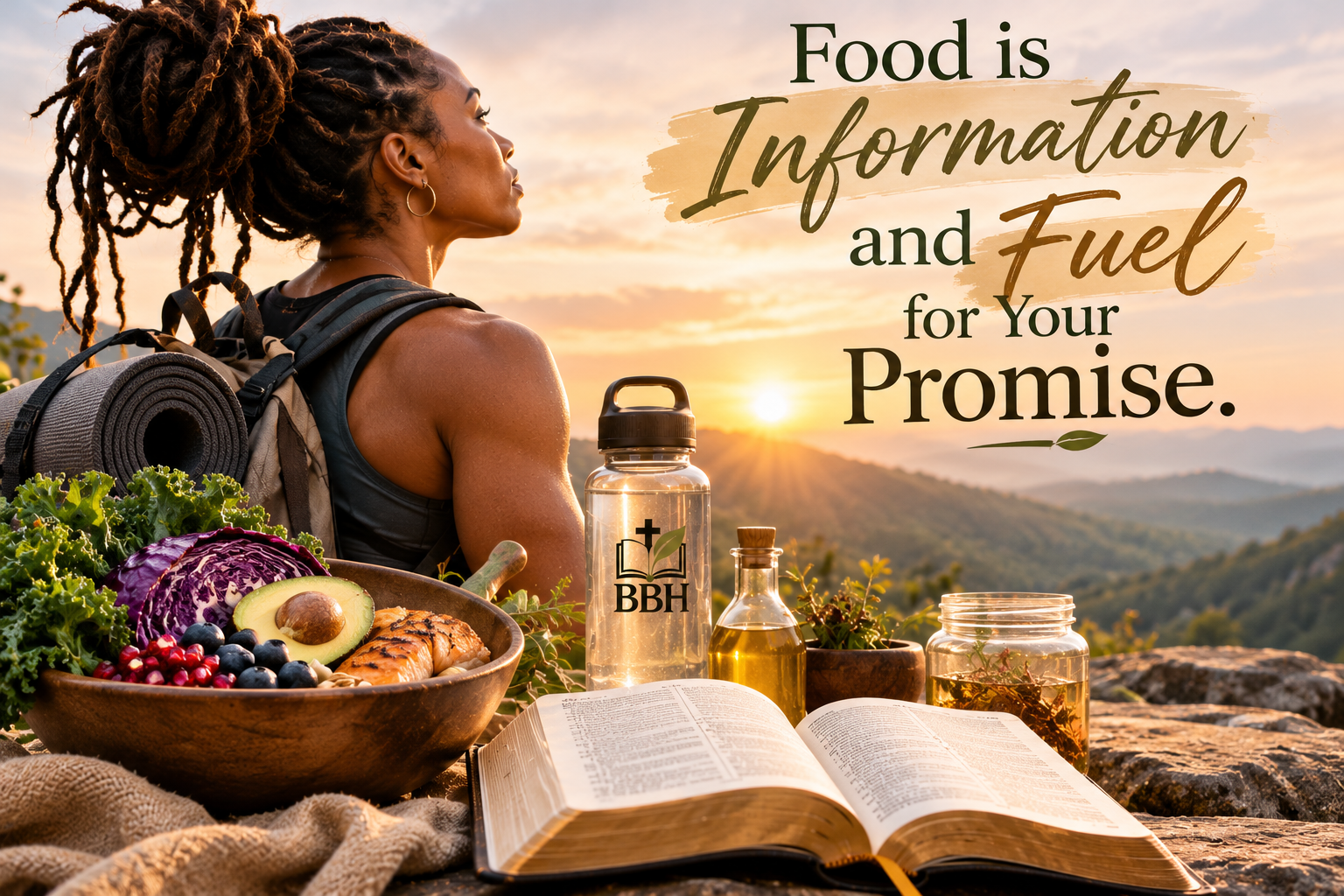
God, in all of His wisdom, created a world capable of nourishing the very bodies He designed. Think about that for a moment. The foods that grow from the earth provide the nutrients our bodies need to function, rebuild, repair, and sustain life. Yet, somewhere along the way, we've exchanged much of what God provided for manufactured products designed to imitate real food.
And then we wonder why we're tired, sluggish, overweight, and struggling with our health!
Food is information. Every time you eat, you're supplying your body with substances that influence how it functions. Protein provides the building blocks for muscle and tissue repair. Carbohydrates provide energy. Healthy fats support cellular function and hormone production. Vitamins and minerals participate in thousands of processes that keep your body functioning. And fiber? It's essential for digestive health and helps nourish the beneficial bacteria living in your gut.
Your body is remarkably intelligent, but it needs the proper resources to do its work.
Now, you don't have to count every calorie, weigh every ounce of food, or become obsessed with your diet to start making better choices. Start by asking yourself one honest question: Am I actually putting nutrients into my body, or am I mostly filling up on crap?
Because there's a difference between being full and being nourished!
You can eat an entire day's worth of calories and still fail to provide your body with adequate nutrients. And while an occasional treat isn't going to destroy your health, what you consistently eat will influence it. Your daily habits matter.
Eat until you're satisfied, not stuffed.
For many of us, we've become accustomed to eating until our plates are empty rather than until our bodies have had enough. Slow down! Put your fork down occasionally. Chew your food thoroughly and give yourself time to recognize when you're satisfied.
I like to encourage people to think about eating until they're roughly 75% full. Now, that's not an exact scientific measurement, but rather a practical reminder that you don't need to eat until you physically cannot fit another bite into your stomach. Learn to recognize the difference between hunger, satisfaction, and simply wanting more because something tastes good.
And please, SEASON YOUR FOOD!
There is an extraordinary variety of herbs and spices available to us, and yet so many people limit themselves to salt, pepper, and a few familiar seasonings. Venture outside of what you're accustomed to!
Use garlic, ginger, rosemary, thyme, oregano, cinnamon, turmeric, parsley, and whatever else brings your kitchen to life. There are literally hundreds of herbs, spices, and combinations to explore. Many contain naturally occurring plant compounds that have been studied for their potential effects on inflammation, oxidative stress, and other physiological processes.
Now, I'm not suggesting that sprinkling cinnamon on your oatmeal is going to cure a disease. But I am encouraging you to recognize that herbs and spices can offer more than flavor. They can contribute beneficial compounds to an already nourishing diet.
And eat the rainbow!
I'm talking about the colors God placed in fruits and vegetables. Deep-green leafy vegetables, purple cabbage, blueberries, bright-orange carrots, red peppers, beets, and countless others. Different foods contain different combinations of vitamins, minerals, fiber, and phytochemicals. By eating a variety of colors, you're increasing the diversity of nutrients and beneficial plant compounds your body receives.
Fresh foods are wonderful, but frozen fruits and vegetables are excellent options, too. Don't let the pursuit of perfection prevent you from making practical improvements.
And if you're following my advice to lift weights, make sure you're consuming adequate protein! You cannot expect your muscles to continually rebuild and strengthen without supplying them with the nutrients necessary to do so.
Lastly, consider giving your digestive system a break.
One practice worth exploring is intermittent fasting. Now, fasting is certainly not a new concept. It's been practiced for thousands of years, including throughout biblical history, although biblical fasting was primarily an act of spiritual devotion rather than a weight-loss strategy.
From a physiological perspective, periods without food allow the body to transition through different metabolic states, including changes in insulin levels and the use of stored energy. Research continues to examine how different fasting schedules influence metabolic health, but fasting is not necessary for everyone to experience the benefits of good nutrition.
You don't have to begin with anything extreme. Start by finishing dinner a little earlier and allowing a reasonable overnight period without eating. For some, that might be 12 hours between dinner and breakfast. Others may find a different schedule works better for their lifestyle and health needs.
But please understand, fasting is not starving yourself! If you spend your eating window consuming nutritionally poor foods, you're still failing to provide your body with what it needs. And fasting requires additional caution or professional guidance for certain individuals, including those who are pregnant, have a history of eating disorders, or take medications that lower blood sugar.
The goal isn't simply to eat less. The goal is to nourish your body better.
I want you to consider something. We are so intentional about what we put into our vehicles, what products we use in our homes, and even what we feed our pets. But when it comes to the very bodies God has entrusted to us, we often settle for whatever is quickest, easiest, or most satisfying at the moment.
Why?
Your body is not an afterthought. It is an extraordinarily complex creation that requires consistent care, nourishment, and attention. And if we truly believe that our bodies are temples of the Most High God, shouldn't that belief influence what we choose to put into them?
Food is information. Food is nourishment. Food is fuel for your assignment.
Be intentional about what you're feeding the body God has given you.
Drink: Water is king

Before you reach for your morning coffee, drink some WATER! Your body has gone hours without fluids while you slept. Water is essential for transporting nutrients, regulating body temperature, maintaining blood volume, and removing waste. Your body simply cannot function properly without it!
According to the National Academies of Medicine, women generally need approximately 91 ounces of total water daily, while men need 125 ounces. But understand, roughly 20% comes from food, leaving approximately 72 ounces of beverages for women and 100 ounces for men. These are general estimates, not rigid requirements. Your needs vary with activity, climate, and overall health.
If you're barely drinking water now, start by adding one extra glass daily. Put it beside your coffee maker tonight so the reminder is waiting for you tomorrow!
And please, PAY ATTENTION TO WHAT YOU'RE DRINKING! Sweet tea, soda, sports drinks, and elaborate coffees can load your diet with unnecessary added sugar. You're trying to nourish your body, not continuously flood it with sugar!
And yes, I'm going to say it: Stop making Starbucks a daily bill! Make your coffee at home, control the ingredients, and save your money.
Simple Vanilla-Cinnamon Coffee Creamer
Shake together:
½ cup milk or unsweetened soy milk
½ cup half-and-half
1 teaspoon vanilla extract
½ teaspoon cinnamon
Optional: 1–2 teaspoons maple syrup
Store in a clean, covered jar in the refrigerator for up to 4 days, or until the earliest ingredient expiration date. Shake before using. Remember, even natural sweeteners like maple syrup count as added sugar!
Enjoy unsweetened herbal teas throughout the day, and consider caffeine-free varieties in the evening to support restful sleep.
Stop treating water like an afterthought! God designed your body to depend on it. Make water your primary beverage and give your body the hydration it needs to function as He intended.
Gut health: Feed your houseguests.
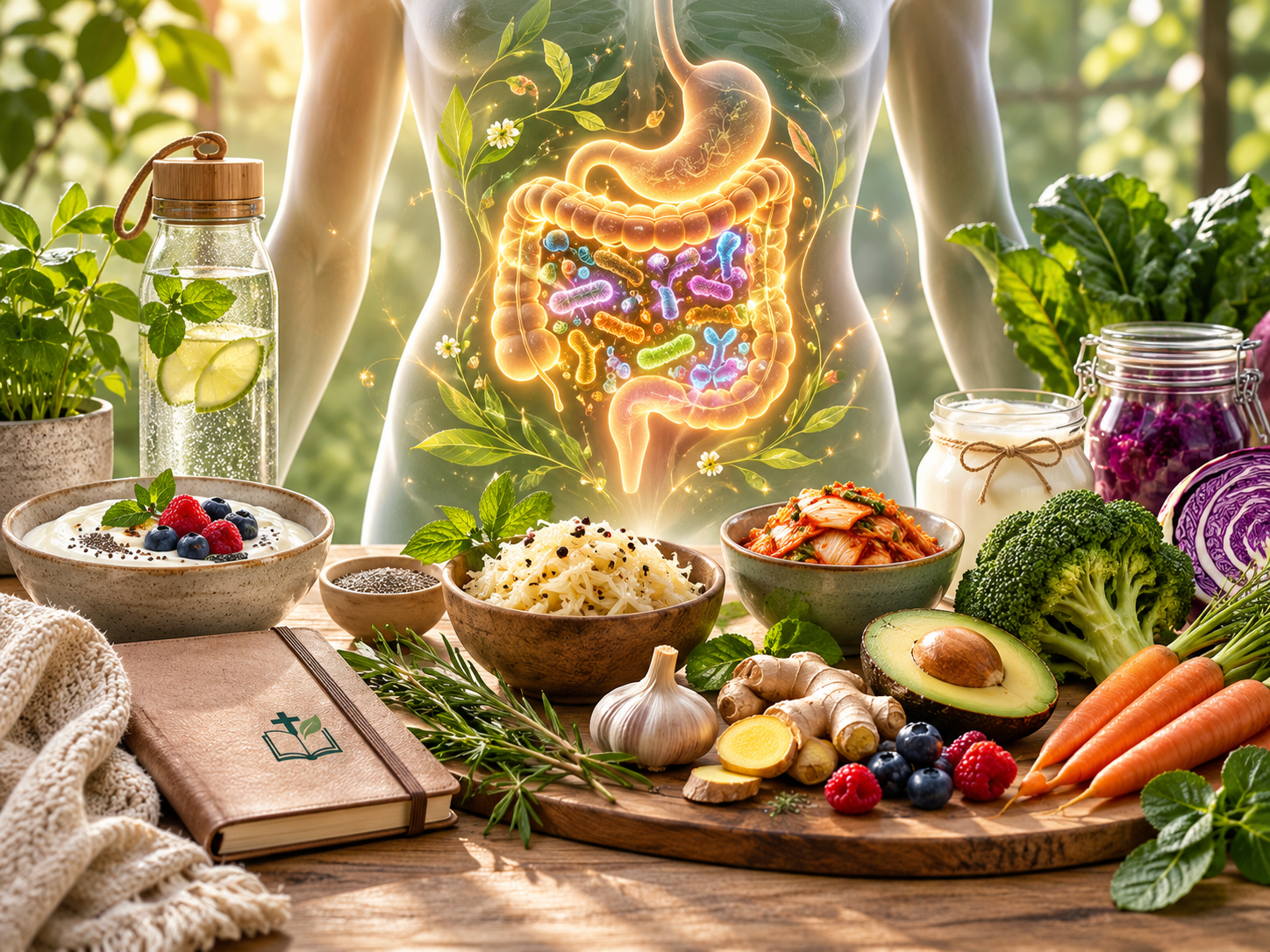
You have trillions of nonspiritual houseguests living inside your gut. Many of these microorganisms do valuable work: helping break down food, producing certain vitamins, supporting immune function, and turning fiber into compounds that nourish the cells lining your colon. Your gut plays a major role in your well-being. Feed it accordingly.
Start with a small serving of fermented food each day. If your digestion tolerates it, work toward including it 1–2 times a day. That is a practical habit to try, rather than a required medical dose. Think plain yogurt with breakfast, kefir in a smoothie, or a spoonful of refrigerated sauerkraut or kimchi alongside dinner.
Probiotics are live microorganisms with demonstrated health benefits. Prebiotics feed beneficial microorganisms already living in your gut. You want to think about both.
Foods that can provide live beneficial cultures: yogurt and kefir labeled with live cultures. Fermented vegetables can also supply live microbes, although not every fermented food contains proven probiotic strains.
Foods that provide prebiotic fibers: onions, garlic, leeks, asparagus, bananas, oats, and beans.
Make the combination easy: yogurt with oats and banana, or a bean bowl with garlic, onions, and a small side of fermented vegetables. Increase fiber gradually so your gut has time to adjust.
Start with food. It brings nourishment alongside the microbes and fibers. A supplement may have a specific use, but it cannot supply everything a varied diet offers.
Rest: Put it on the calendar.

Sabbath matters. Whether your practice is Saturday or Sunday, make room to stop. Take a day to say NO to the world and YES to God.
This one is hard for me as a single mom. The needs do not disappear because I have decided to rest. There are still meals to make, a child to care for, and responsibilities waiting for my attention. But I can choose to honor God and my body within the life I actually have.
That might mean preparing a simple meal ahead of time, leaving the laundry unfolded, silencing work notifications, or refusing to turn the entire day into an errands marathon. It might look like worship, a quiet walk with my daughter, reading Scripture together, or accepting help so I can sit down.
Let some things remain unfinished. Give yourself permission to be present with God and the people you love. Then carry that respect for rest into your week by protecting your bedtime and making room for recovery.
Exercise: Go do something physical.
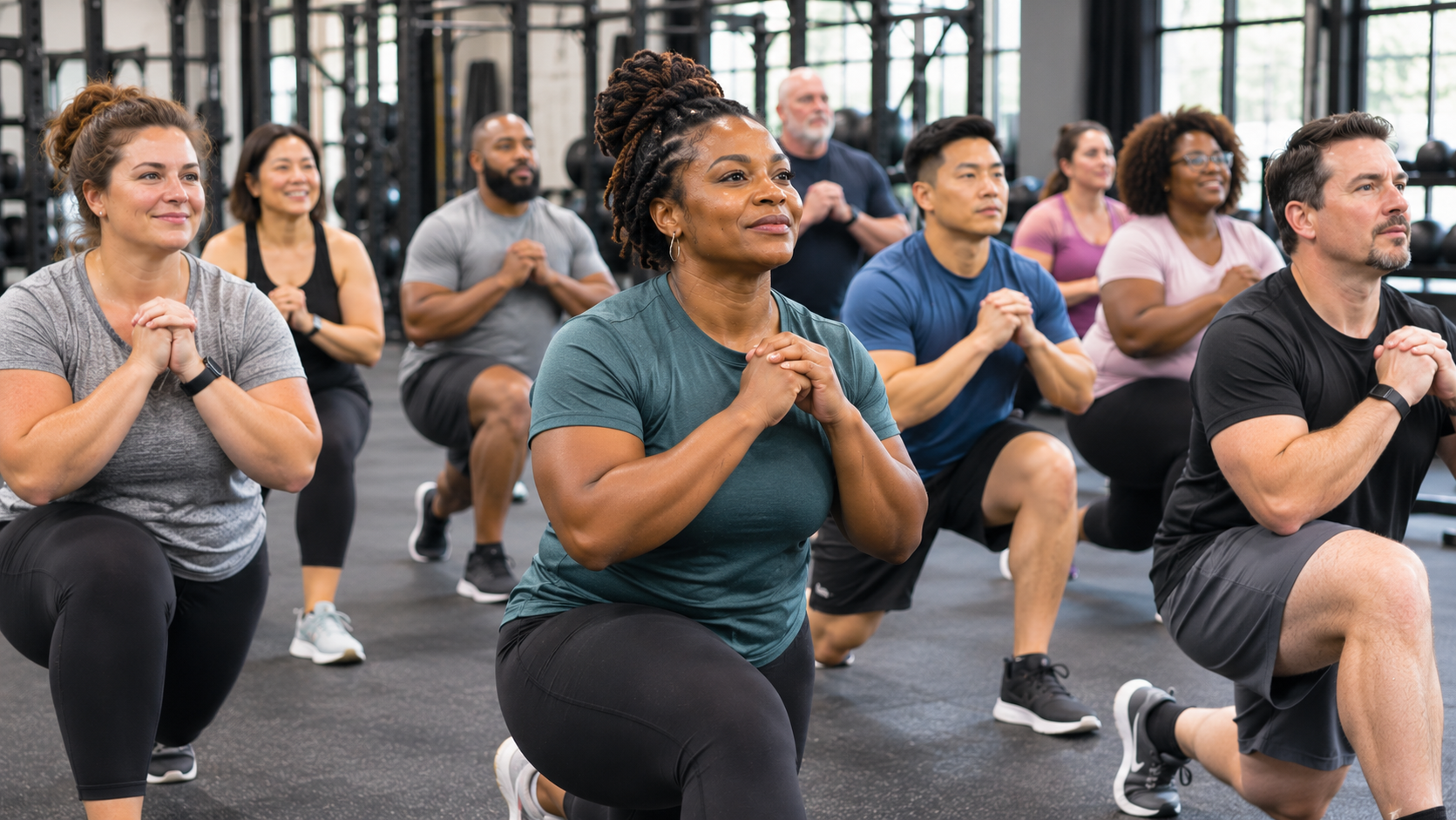
Of course, this is my favorite. GO LIFT WEIGHTS!
Strength training is not just about building muscle or looking good in the mirror. It's about building a body that is strong, capable, and resilient! Your muscles, bones, tendons, and ligaments were designed to withstand resistance. And when you consistently challenge them, they adapt, becoming stronger and better equipped to support you through life.
Aim for 2–3 strength training sessions each week, allowing adequate recovery between sessions that challenge the same muscles. Train your entire body: legs, hips, back, chest, shoulders, arms, and core. And please, don't be afraid to lift heavy! Heavy is relative to your current strength. Choose a weight that makes those last few repetitions difficult while still allowing you to maintain proper form.
You should have to WORK for it! Your muscles need a reason to grow stronger, and that reason is resistance. If you're constantly lifting weights that require little effort, you're limiting your potential. Challenge yourself! As your body adapts, gradually increase the resistance.
But understand the difference between muscular effort and injury. Fight through the challenge of working muscles, not sharp pain or compromised joints. Proper technique is not optional.
And here's what I want you to remember: Strength is not just about what you can lift in the gym. It's about what your body is capable of doing outside of it. Getting off the floor, carrying your children, climbing stairs, maintaining your independence as you age, and having the physical capacity to carry out the assignments God has placed before you.
Stop settling for weakness when you have the opportunity to build strength. Your body is a temple of the Most High God. Build it. Strengthen it. Steward it well!
Don’t Skip The Cardio!

Just as weightlifting is essential for building strong bones, muscles, tendons, and ligaments, cardiovascular endurance is equally important to your overall health. What good is having strong muscles if your heart and cardiovascular system are weak? Your body was designed to function as a whole, and when one system is neglected, your health can suffer. While both muscular strength and cardiovascular endurance are essential, cardiovascular health deserves particular attention because of its critical role in sustaining life.
One of the simplest ways to improve your cardiovascular health is to MOVE MORE! Take more steps, jump, skip, dance, play with your children, or simply find more reasons to get up and get moving. Improving your endurance doesn't require hours on a treadmill, although a good run or brisk walk is certainly an effective way to get the job done. The point is to challenge your heart, increase your activity, and make movement a regular part of your life.
The MINIMUM recommended cardiovascular activity is 150 minutes per week. That’s just 21 minutes a day or 30 minutes, 5 days a week. But understand this: 150 minutes is the baseline, not the finish line!
If you’re not there yet, start where you are. Add just 2 minutes of activity each day, gradually building toward that first benchmark. And once you reach it, don’t settle. Challenge yourself to exceed it!
Oftentimes, people become comfortable. We settle into our routines, stay within the boundaries of what feels acceptable, and resist anything that requires us to push beyond them. But dare I say, Jesus wasn't comfortable on the cross. He bled for you. He died for you. And through Him, you've been given the opportunity to live a life that reflects His image, not just spiritually, but in how you steward the body you've been given.
Stop choosing comfort over growth! For many people, the very habits that keep them comfortable have contributed to their current state of health. And if those habits brought you here, what makes you think continuing them will take you somewhere better?
Venture to do the difficult thing. Challenge yourself. Build your endurance. Strengthen your body. Remember, your body is a temple of the Most High God! It deserves to be cared for with the utmost diligence, effort, and intention. Not out of vanity, but out of reverence for the One who created it.

The Choice Is Yours
At the end of the day, knowing what to do and actually doing it are 2 very different things. You can read every health article, follow every fitness expert, and learn everything there is to know about nutrition, but knowledge without application will produce very little change.
God has given us extraordinary bodies, designed with the ability to adapt, strengthen, repair, and sustain life. He's also provided us with the resources to care for them. Yet, the responsibility to put that knowledge into practice belongs to us.
And no, I'm not suggesting that taking care of your body guarantees perfect health. But I am saying that we have a responsibility to steward what God has entrusted to us.
You don't have to change everything overnight. Start with what you can do today. Walk a little farther. Lift something heavier. Choose foods that nourish rather than simply fill you. Drink more water. Get adequate rest. And tomorrow, do it again!
Remember, discipline isn't always comfortable, and growth rarely happens without resistance. But the goal isn't simply to live longer, look better, or weigh less. The goal is to build the strength, endurance, and capacity to fulfill the assignment God has placed on your life.
Your body is a temple of the Most High God. Treat it accordingly.
Stop waiting for motivation. Start practicing stewardship.
After all, wellness is worship!